



How does BarTender for NetSuite turn labels from a recurring problem into measurable ROI?
Labels are often treated as a petty operational detail. In reality they drive costs, error rates and audit outcomes. For NetSuite users, the difference between a manual, export-driven labelling process and a centrally managed, SuiteApp-enabled labelling system can be quantified and it is often material.
This article looks beyond features to the specific outcomes manufacturers should expect from BarTender Cloud for NetSuite: lower label costs, fewer reworks, stronger compliance readiness and simpler scale-ups. It also covers practical integration concerns, a mini case study to illustrate likely savings, and an evidence-based pilot you can run this month.
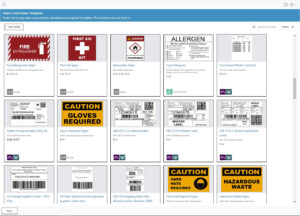 Why labels hit your P&L harder than you think
Labels are cheap per unit but expensive in aggregate. Consider these cost drivers that are often overlooked:
- Reprints and wasted media — small misprints multiply quickly across high-volume SKUs.
- Labour for fixes — manual corrections, re-labelling and exception handling add minutes per order.
- Returns and remediation — incorrect labelling can trigger non-compliance or customer returns with administrative overhead.
- IT and maintenance — driver installs, firmware mismatches and printer support create hidden operational costs.
When you total these, labelling can represent a recurring operational line item that scales with volume — and it’s exactly the type of problem centralised labelling is designed to remove.
Business outcomes: the measurable wins from BarTender + NetSuite
BarTender Cloud for NetSuite is more than a designer and print engine. When used as part of a controlled rollout, it delivers measurable improvements:
- Reduced label waste and reprints — central templates and live data reduce format errors and inconsistent print density.
- Lower labour costs — fewer exception events and easier operator checks reduce manual interventions.
- Fewer compliance incidents — controlled templates and mandatory fields reduce remedial audits.
- Faster onboarding for new sites — driverless cloud printing and central templates reduce setup time for new locations or pop-ups.
- Lower TCO vs middleware — native integration reduces the need for bespoke exports and third-party sync layers.
These outcomes are quantifiable. The trick is to baseline before you change anything and measure the same KPI after the pilot.
Mini case study — a plausible six-week impact
Profile: Mid-sized food manufacturer, single distribution centre, 250 SKUs, 20,000 monthly dispatch labels.
Problem: 3% of labels required reprints due to print density or barcode formatting, and daily exception handling added 45 minutes of labour per day. Annualised, label rework and labour cost ≈ $25,000.
Pilot (5 days): Centralised template for dispatch labels, driverless printing to two test printers, first-read barcode validation.
Results (projected after pilot): label reprints reduced from 3% to 0.5%; daily exception handling cut to 15 minutes; first-time scan rate improved by 12 percentage points.
Estimated annual benefit: $18,000–$22,000 from reduced reprints and labour; faster order throughput and fewer return incidents produced additional indirect savings.
This demonstrates how small per-label improvements scale into meaningful annual savings for medium and large volumes.
Integration & technical considerations IT will ask about
When IT evaluates BarTender for NetSuite they typically ask three questions:
- Does it require middleware?
BarTender Cloud for NetSuite is designed to trigger from native NetSuite records, reducing or eliminating the need for custom export middleware. - Will our printers support driverless cloud printing?
Most modern industrial printers are compatible, but validation during a pilot is essential. Cloud Coders validate firmware and recommend models where necessary. - How are templates and permissions controlled?
Centralised template libraries allow role-based control and change history — vital for compliance and audit trails.
Addressing these early reduces deployment friction and speeds time-to-value.
A tight pilot plan that proves business value (what to measure)
To prove the case, run an evidence-based pilot with clear metrics:
- Baseline week: measure current label reprint rate, daily exception labour minutes and first-time scan rate.
- Pilot deployment (one week): central template, cloud printing enabled, one test printer in peak shift.
- Measure: label reprint rate, exception minutes, first-time scan rate and order throughput.
- Calculate: direct cost savings from reduced reprints and labour plus estimated indirect benefits (fewer returns, faster shipments).
This data-driven approach lets you create a concise business case (with numbers) for scaling.
Practical tips to get a clean pilot
- Use consistent label media to avoid print-density variance.
- Include human-readable verification fields to speed operator checks.
- Run printer firmware updates before the pilot to avoid device irregularities.
- Prepare a simple fallback PDF label for rare offline contingencies.
Next step — quantify the opportunity for your site
If labels are creating daily friction, the quickest way to see value is a focused pilot that measures real operational KPIs. Download our resources and use the KPI checklist to baseline your current state. If you’d rather skip the setup, book a free 30-minute expert review and we’ll outline a pilot and the likely savings for your operation.
Resources and booking: https://cloudcoders.com.au/our-resources/
FREQUENTLY ASKED QUESTIONS
Q1: How quickly will we see payback from a BarTender pilot?
A: For medium to high label volumes, measurable improvements (reduced reprints and less exception labour) often show in weeks and can produce payback within months.
Q2: Can BarTender handle complex manufacturing label logic (lots, serials, allergens)?
A: Yes — BarTender supports multi-level joins and conditional logic to print regulatory fields, batch and serial information as part of the template.
Q3: What if our printers are older industrial models?
A: Many industrial printers support cloud printing; Cloud Coders will validate compatibility and recommend firmware or models if a replacement is required.
Q4: How do we ensure auditability and change control for label templates?
A: Centralised template management with role-based controls and version history provides the required audit trail for compliance audits.